Poseidon | Neptune Nature and Deeds Bundle Mythology Series for Middle and HS
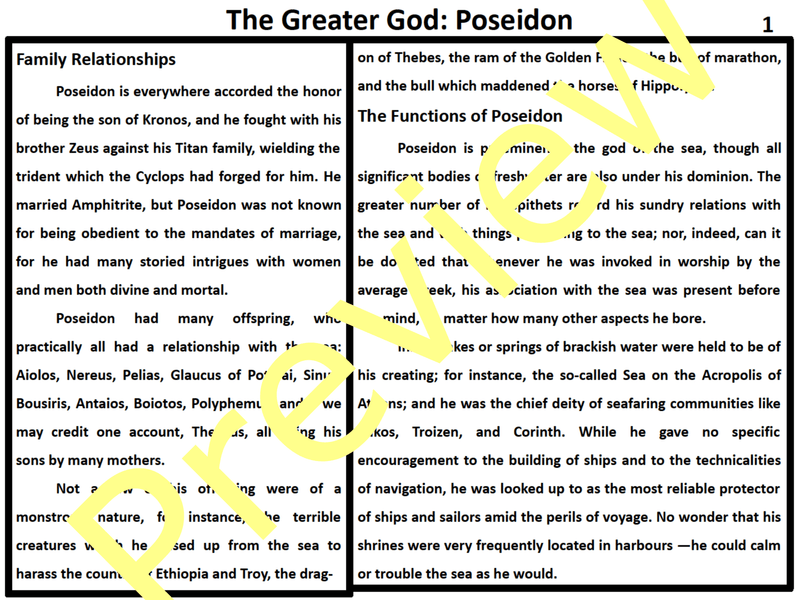
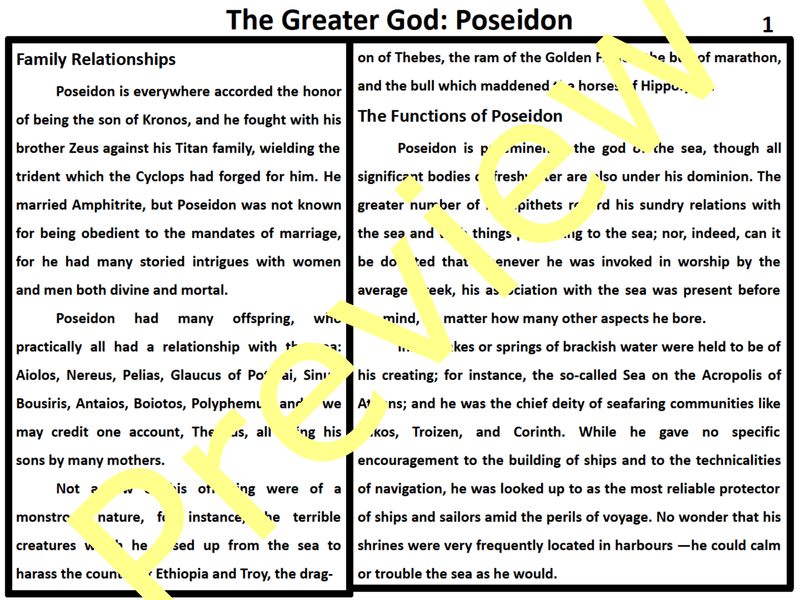
The God Poseidon, known as Neptune in Roman mythology, is everywhere in arts and literature, and certainly in your classroom if you teach any grade from sixth to seniors, and undergraduates. That's why the Poseidon thematic bundle is rich fodder for any humanities, English Language Arts, or Social Studies teacher. The unit explores the marine god — how he holds a significant position in the Greco-Roman pantheon as one of the original Cronides—offspring of Chronos and Rhea. After the cataclysmic events of the Titanomachy, Poseidon was granted dominion over the ocean, following the distribution of realms among him, Zeus, and Hades. Dive in.
The Nature and Deeds of Poseidon (Neptune) in Greek and Roman Mythology
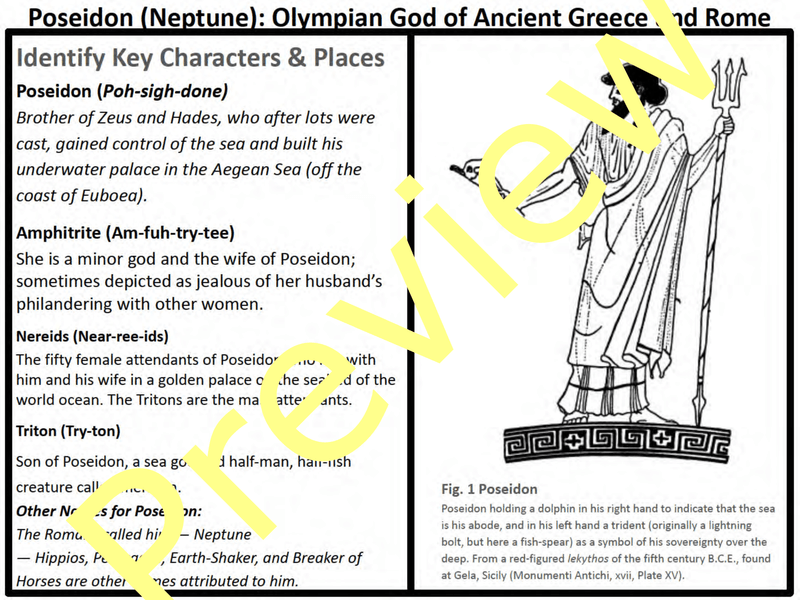
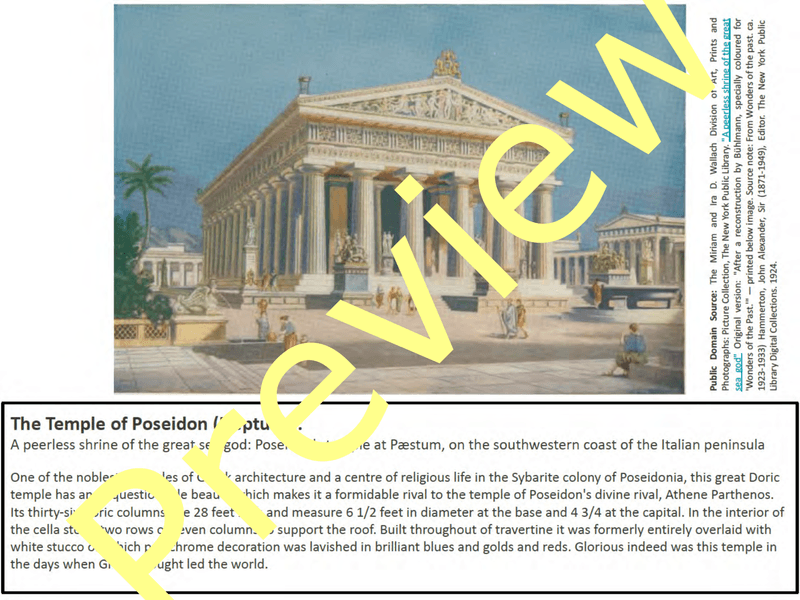
- Poseidon's World: Base Lesson
- Introduce students to Poseidon with this introductory lesson.
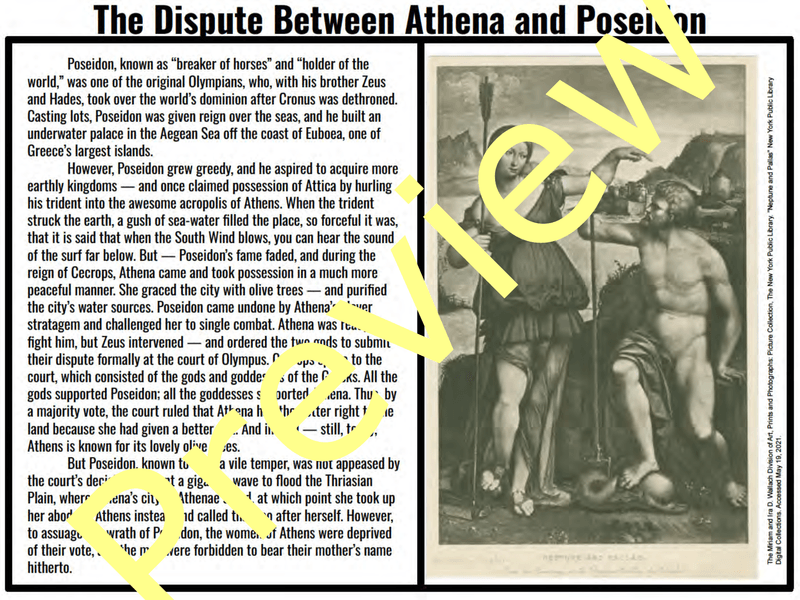
- Athena Versus Poseidon
- Evoke a powerful story about Poseidon and his failed political struggle over controlling Athens
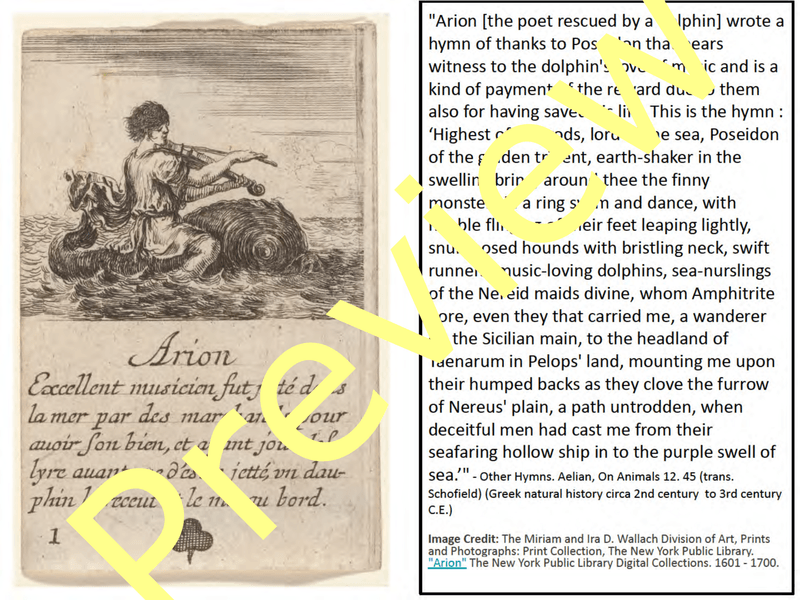
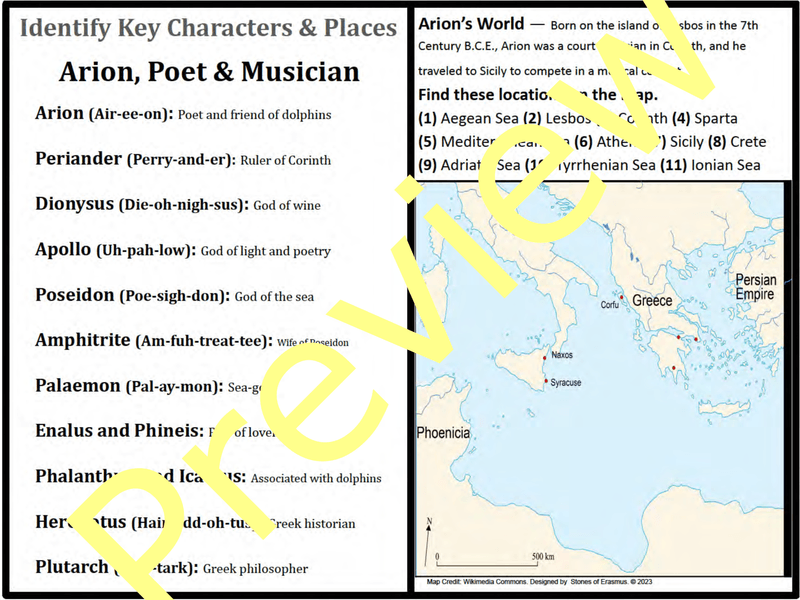
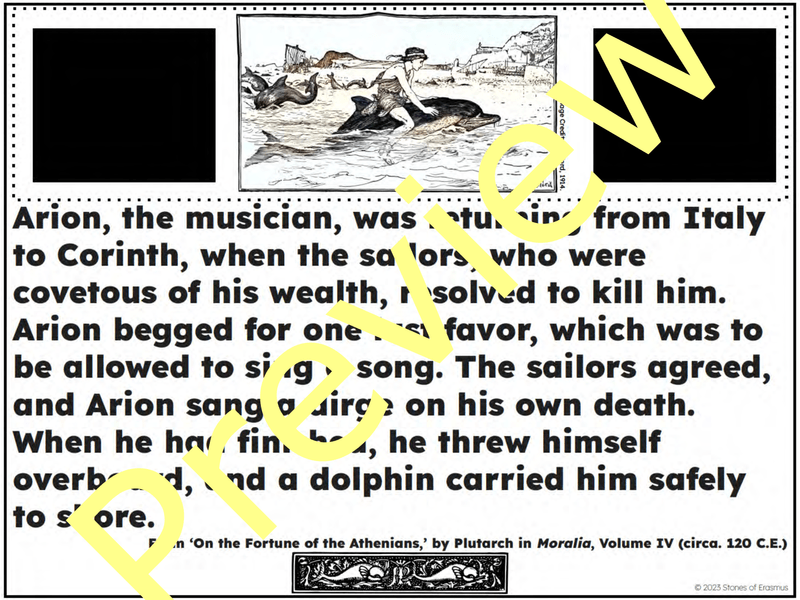
- Arion — Musician and Poet
- End with the brief tale of Arion, a musician associated with marine myths and the God of the sea.
- Bonus Files
- 10 Tabular Charts for the Study of Mythology (based on Hesiod)
- Unit Standards Alignment Chart (Common Core, TEKS, VA SOL)
Each lesson comes equipped with the following:
- Includes PDF, Google Workspace (Slides, etc)
- Teacher Suggested Lesson Plan and Pacing Calendar with Notes
- Key Characters and Places Anchor Chart
- Illustrated Reading Cards
- Art & Literature Connections
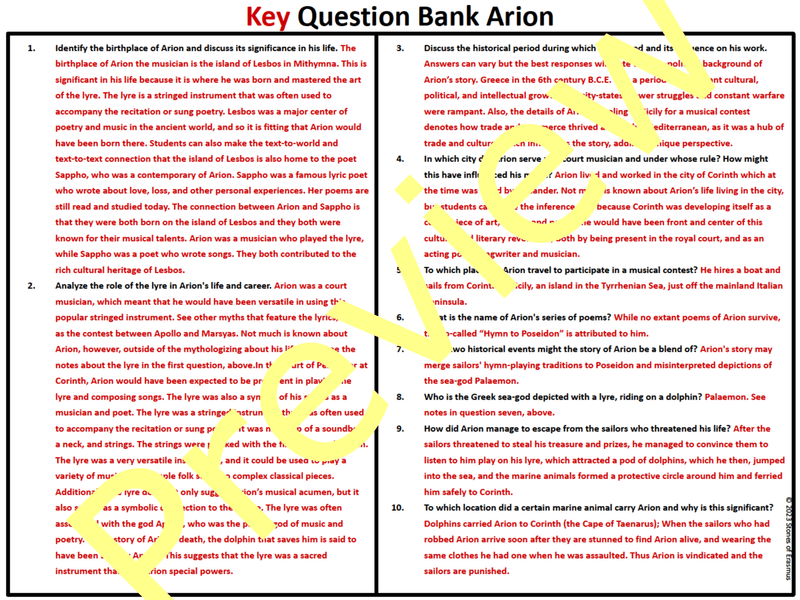
- Question Banks
- Notetaking Templates
- Frayer Model Templates
- 3-2-1 Exit Tickets (for Formative Assessment)
- Writing Prompts
- Further Reading Guides
- Assessments (including Google Forms)
- Answer Keys for All Student-facing Documents
I created this resource with middle and high students in mind. It is designed for an English Language Arts Mythology unit —
- Expand out for any myth-related unit!
- Pair with deep archetypes in literature, tropes such as, On Gods of the Sea, Lyre playing in Ancient Greece, and More!
- Use this resource as a stand-alone lesson or, pair it with a larger unit on Myth —Robert Graves's Greek Myths, or Bernard Evslin's Heroes, Gods, and Monsters (1966).
For resources similar to this one, see my:
- My popular Plato's Cave lesson!
stonesoferasmus.com © 2023-2025